
Structure
In general, it is thought that the right hemisphere is the ‘creative’ side, whilst the left hemisphere is the ‘logical’ side. Individuals who are right handed have left hemisphere cerebral dominance due to the contralateral innervation.
Broadly, the cortex is subdivided into regions according to the bones of the cranium that overly it.
The Frontal Lobe, the most anterior part of the brain, has roles in decision making and skilled voluntary movements.
The Parietal Lobe lies posterior to the Frontal Lobe, and has functions in perception, as well as visuospatial localisation, of the body.
The Occipital Lobe is the most posterior part of the cerebrum, having roles in visual perception.
The Temporal Lobes are the most lateral areas of the brain, lying below the Sylvian Fissure. They are important in auditory perception, cognition and memory.
The thickness of the cerebral cortex varies across the brain, between 1.5mm and 4.5mm. Korbinian Brodmann (1909) found within this thin cortex are six cortical layers, though some areas differ. The Primary Visual Cortex is a good representation of the rest of the cortex:
I - The Molecular Layer is the most external layer, and closest to the pial surface. Within this layer are mainly synaptic connections between apical dendrites of pyramidal neurons from layers II and V and axons from other regions in feedback pathways. There are relatively few neurons present, however inhibitory Cajal-Retzius neurons can be found.
II- The External Granule Cell Layer also contains apical dendrites from the pyramidal neurons, but small pyramidal cells make up the majority of neurons present here. There are also granular neurons and some inhibitory neurons such as bipolar and bouquet cells.
III - The External Pyramidal Cell Layer contains primarily small and medium sized pyramidal neurons, however many other types are present. This layer is the main source of corticocortical efferents.
IV- The Internal Granule Cell Layer is made up largely of spiny stellate neurons which receive excitatory inputs from the thalamus and process them onto the pyramidal cells present.
V- The Internal Pyramidal Cell Layer contains mainly large pyramidal neurons, such as betz cells. This is also the main supply of efferents to subcortical regions of the brain.
VI- The Multiform Layer is the most internal layer of the cortex, lying closest to the white matter. It contains both large and small pyramidal neurons, and projects axons to thalamus, establishing a reciprocal interconnection between the two.
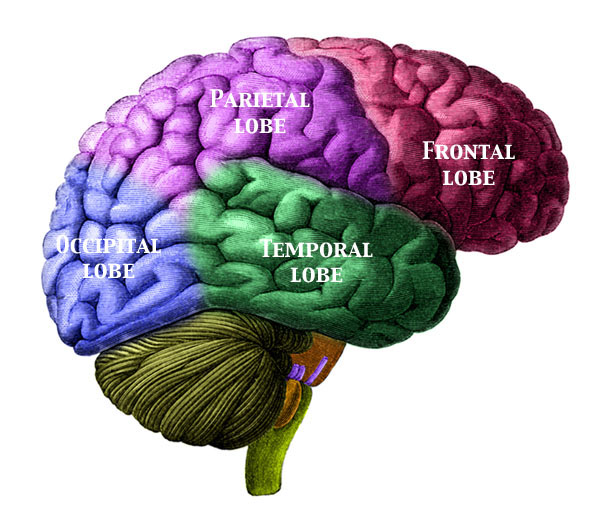
Figure 1. Lobes of the brain. Image courtesy of Wikimedia Commons under Creative Commons Attribution 3.0 Unreported license. Author: Camazine
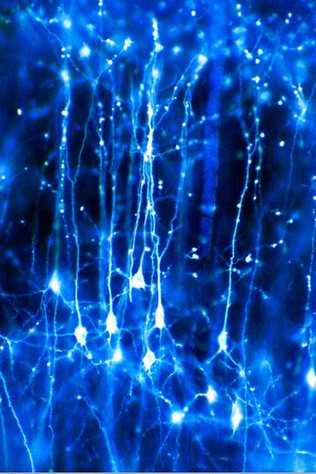
Figure 2. Neurons in cortical layers. Image courtesy of Flickr under Creative Commons license